
 EN
EN
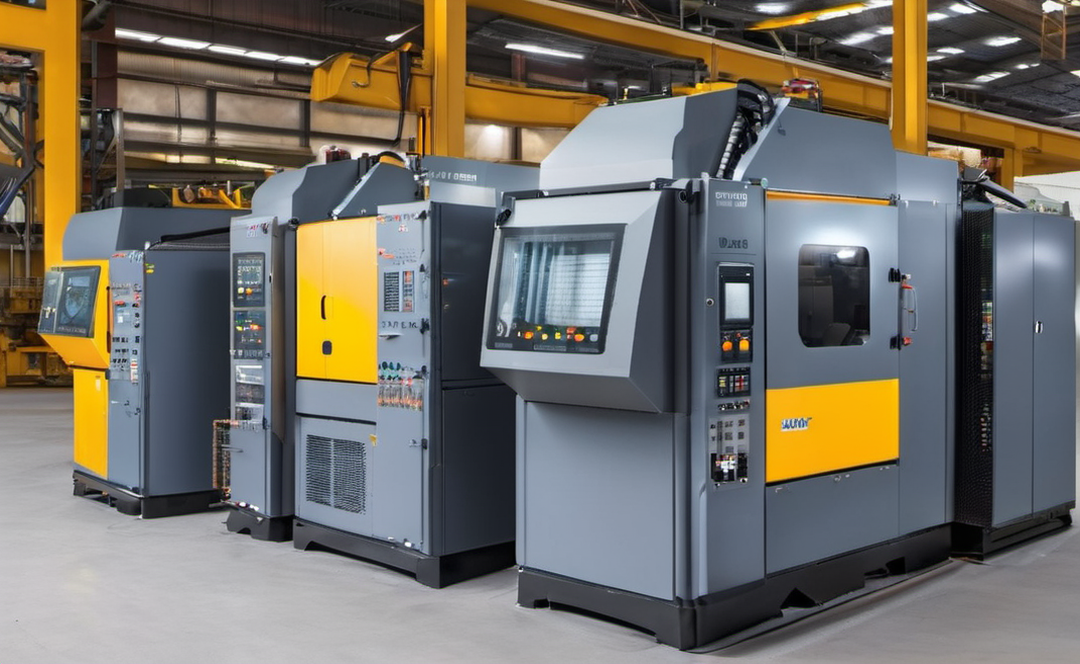
Thickness variation is one of the most expensive and frustrating problems on any sheet extruder line. It shows up as poor flatness, inconsistent weight per square meter, unstable trimming, higher scrap, and complaints from downstream processes like thermoforming, laminating, or printing.
From a senior process engineer’s troubleshooting perspective, sheet gauge problems are rarely caused by “one bad setting.” They’re usually a system issue involving die adjustment, melt delivery stability (often the melt pump), and cooling roll uniformity. And if your line includes a downstream cutter—such as a foam sheet cutting machine or a thermocol sheet cutter—unstable gauge can also translate into cutting defects and inaccurate length/stacking.
This guide provides a structured diagnosis path and practical fixes, plus a recommendation on when an automatic thickness measurement system is worth the investment.
1) First: Define the Thickness Problem (Across-Width vs. Machine Direction)
Before making adjustments, confirm what kind of variation you have. The corrective action depends on the pattern:
A) Cross-direction (CD) variation: thick/thin across the sheet width
Typical symptoms:
- one edge consistently thicker
- center thick / edges thin (or vice versa)
- repeating bands across the width
Common root causes:
- die lip profile or die bolt settings
- die temperature zoning imbalance
- internal die contamination / partial blockage
- uneven roll nip or roll temperature distribution
B) Machine-direction (MD) variation: thickness changes over time
Typical symptoms:
- thickness “waves” or periodic cycling
- sudden drift after speed change
- unstable thickness during startup and after stops
Common root causes:
- melt pressure fluctuations (extruder output instability)
- melt pump speed/pressure instability
- temperature instability (barrel, adapter, die)
- downstream puller/haul-off speed fluctuations
- roll cooling control instability
Actionable tip: Save samples with timestamps and line speed noted. Many MD issues correlate with periodic pressure/temperature cycling.
2) Quick Diagnostic Workflow (Use This Before Touching the Die Bolts)
When thickness is uneven, operators often start adjusting the die immediately. That can make the situation worse if the actual cause is melt instability or cooling. Use this sequence:
- Check melt pressure trend (at adapter/die inlet)
- Check melt temperature stability (real values, not just setpoints)
- Check roll stack cooling uniformity and nip stability
- Then adjust die lips/bolts for CD profile correction
- Validate with measurement (manual or automatic) and lock settings
This order prevents “over-correcting” a die profile that isn’t the true root cause.
3) Root Cause #1: Die Adjustment & Die Condition (Most Common CD Issue)
3.1 Die bolt / lip setting errors
If the die is not tuned correctly, the flow distribution causes thickness variation across the width.
What to do
- Warm the die to stable operating temperature and hold until fully soaked
- Adjust in small steps (e.g., quarter turns), wait for response
- Log each adjustment (position + result) to avoid chasing
Red flag: If you need large adjustments often, the issue may be elsewhere (temperature zoning, contamination, roll stack).
3.2 Die temperature zoning imbalance
Even if the die bolts are correct, uneven die temperature changes melt viscosity across width.
Checks
- Verify each die zone actual temperature (use calibration if available)
- Look for zones that overshoot or lag (bad heater, bad thermocouple, poor PID tuning)
- Confirm insulation and heater band condition
3.3 Die contamination / partial blockage
Carbonized polymer, degraded additives, or contaminants can partially block flow channels.
Signs
- “stripe” or band defects that don’t respond to die bolts
- thickness pattern changes suddenly after material change
- surface streaks accompany gauge variation
Fix
- Clean die properly and safely (follow supplier procedure)
- Improve filtration upstream if contamination repeats
- Review material drying and cleanliness (especially with recycled content)
4) Root Cause #2: Melt Pump (Gear Pump) Stability (Major MD Variation Source)
Many sheet lines use a melt pump to stabilize output. But a melt pump that is incorrectly sized, worn, or poorly controlled can create thickness cycling instead of eliminating it.
4.1 What melt pump problems look like
- thickness oscillation with a repeating period
- pressure “hunting” on the gauge
- sheet gauge changes when pump temperature drifts
- instability after speed changes (slow recovery)
4.2 What to check on the melt pump system
- Pump inlet pressure: too low can cause starvation and pulsation
- Pump outlet pressure: should be stable; large swings indicate control issues
- Pump temperature control: viscosity sensitivity makes temperature stability critical
- Drive and control loop: verify closed-loop control strategy and tuning
- Wear: internal clearance wear increases slip and reduces stability
Practical fix path
- Confirm pump temperature is stable at operating load
- Verify inlet pressure is within recommended range (avoid cavitation/starvation)
- Check for filter screen pack blockage causing inlet instability
- Inspect for wear if pressure control cannot stabilize
- If needed, re-size pump or adjust control method (depending on product and throughput)
A stable melt delivery system dramatically reduces MD thickness variation and makes die tuning “hold” longer.
5) Root Cause #3: Roll Cooling Uniformity & Nip Control (Often Misdiagnosed)
Even with perfect melt flow, sheet thickness can vary due to downstream forming and cooling—especially on foam sheet or thermocol-type products where cooling and compression are sensitive.
5.1 Uneven roll temperature
If one side of the roll stack is warmer, the sheet can retain more thickness or shrink differently, creating uneven gauge and flatness.
Checks
- Measure roll surface temperature left vs. right (at stable production)
- Verify water/thermal oil flow rate and distribution
- Inspect scaling/blockage inside roll channels
- Confirm chiller capacity and temperature stability under load
5.2 Nip pressure and roll alignment
Uneven nip pressure causes uneven calendering/compression across the width.
Checks
- Verify roll parallelism and mechanical alignment
- Inspect bearings and frame rigidity
- Confirm nip pressure settings and repeatability
- Watch for vibration that “prints” variation into the sheet
6) Why Thickness Variation Creates Cutting Problems (Foam Sheet Cutting Machine / Thermocol Sheet Cutter)
If thickness is unstable, downstream cutting becomes less predictable:
- Inconsistent thickness can change sheet stiffness → feeding slip
- Edge bead variation affects slitting and stacking accuracy
- Foam thickness variation changes compression during cutting → burrs or poor edge quality
For lines running a foam sheet cutting machine or thermocol sheet cutter, fixing gauge variation upstream often improves:
- cut length repeatability
- squareness
- stack quality and reduced jams
When buyers compare sheet cutting machine price, remember: a “better” cutter cannot fully compensate for unstable sheet thickness. Cutter performance depends on stable upstream extrusion and cooling.
7) Recommended Solution Upgrade: Automatic Thickness Measurement (When It’s Worth It)
If you repeatedly fight thickness drift, an automatic gauge system can pay back quickly through scrap reduction and faster stabilization.
7.1 What automatic measurement helps you do
- Monitor CD profile in real time
- Identify MD oscillations and correlate with pressure/temperature trends
- Shorten startup time by guiding die/roll adjustments
- Build a data record for troubleshooting and process control
7.2 When to consider it
- High-value sheet where scrap is expensive
- Tight tolerance requirements
- Frequent material changes (virgin/recycled blends, additives)
- High-speed lines where manual measurement lags the process
Even a simple system that logs gauge trend can prevent “trial-and-error” adjustments that increase waste.
8) Summary: A System Approach Fixes Uneven Gauge Faster
To troubleshoot thickness variation on a sheet extruder, follow a structured method:
- Identify whether variation is CD (across width) or MD (over time)
- Confirm melt pressure and temperature stability before touching die bolts
- Tune die profile and verify die temperature zoning
- Inspect melt pump stability and inlet/outlet pressure conditions
- Verify roll cooling uniformity, nip pressure, and alignment
- If problems repeat, add an automatic thickness measurement system
This approach avoids endless manual adjustments and helps you achieve stable quality—improving yield, OEE, and downstream cutting performance.
Table of Contents
- 1) First: Define the Thickness Problem (Across-Width vs. Machine Direction)
- 2) Quick Diagnostic Workflow (Use This Before Touching the Die Bolts)
- 3) Root Cause #1: Die Adjustment & Die Condition (Most Common CD Issue)
- 4) Root Cause #2: Melt Pump (Gear Pump) Stability (Major MD Variation Source)
- 5) Root Cause #3: Roll Cooling Uniformity & Nip Control (Often Misdiagnosed)
- 6) Why Thickness Variation Creates Cutting Problems (Foam Sheet Cutting Machine / Thermocol Sheet Cutter)
- 7) Recommended Solution Upgrade: Automatic Thickness Measurement (When It’s Worth It)
- 8) Summary: A System Approach Fixes Uneven Gauge Faster