
 EN
EN
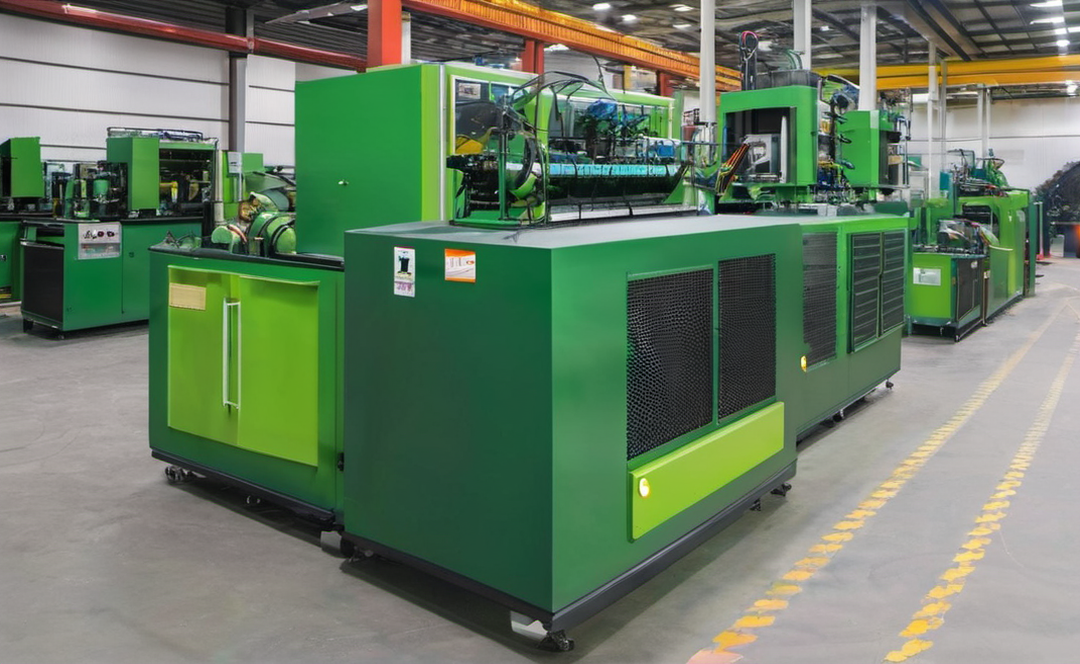
Plastic restriction policies are expanding worldwide—covering everything from lightweight carrier bags and single-use packaging to extended producer responsibility (EPR) and carbon reporting. For packaging factories and brand owners, this shift creates both pressure and opportunity: the market is moving toward reusable and lower-impact packaging, and production capacity must adapt quickly.
One of the most practical ways to support this transition is to build a reliable non-woven bag supply chain using a non woven cloth making machine and downstream converting equipment (bag forming, sealing, punching, stacking). But “non-woven” does not automatically equal “green.” Whether your operation truly supports sustainable manufacturing depends on the engineering details: energy efficiency, process stability, scrap control, and data traceability.
This article explains:
- why non-woven packaging is growing under global plastic restrictions
- which machine technologies reduce waste and carbon footprint
- how a non woven box bag making machine and non woven bag handle punching machine affect quality and yield
- what really drives the cost of non woven bag making machine projects and long-term ROI
1) Global Plastic Restrictions: Why Packaging Manufacturers Must Adapt
Across many regions, packaging policies are tightening through:
- bans or levies on thin single-use plastic bags
- EPR schemes shifting waste management cost to producers
- recycled content requirements and packaging taxes
- retailer sustainability scorecards and supplier audits
- climate reporting expectations (energy, emissions, footprint transparency)
For manufacturers, the business impact is direct:
- customers request reusable bags and alternative packaging formats
- orders increasingly specify sustainability metrics (material usage, recyclability, footprint)
- compliance documentation becomes part of the sales process
As a result, factories that can produce consistent-quality non-woven bags at scale—while controlling waste and energy—are in a strong position.
2) “Non-Woven” Isn’t Automatically Sustainable: What Determines Real Impact
From a CEO or sustainability leader’s view, the true environmental impact is determined by performance per use and manufacturing efficiency, not just the material category. Two factories producing the same bag style can have very different footprint due to:
2.1 Scrap rate and rework
Scrap is the “invisible” sustainability problem. Every rejected bag includes:
- wasted raw fabric
- wasted electricity and heat used to process it
- lost labor time
- more downtime and repeated setup scrap
Lower scrap is one of the fastest ways to improve both ESG performance and profit.
2.2 Energy intensity per bag
Energy cost and carbon intensity matter more as electricity prices rise and customers demand footprint transparency. Efficient drives, stable heating control, and reduced idle losses can significantly lower kWh per unit.
2.3 Material utilization and lightweighting
Precision cutting, stable tension, and reliable sealing allow you to:
- reduce overdesign (unnecessary thickness/GSM)
- optimize gussets and bottom structure
- reduce reinforcement patches where not needed
2.4 Traceability and compliance reporting
For ESG and customer audits, factories increasingly need:
- production records (output by batch/shift)
- reject tracking and root cause analysis
- energy and downtime logs
- parameter recipe management (repeatability)
This is where modern control systems and digitization matter.
3) What a “Non Woven Cloth Making Machine” Means (Clarify Scope Before Buying)
The phrase non woven cloth making machine can refer to the fabric production line (creating non-woven roll goods), or it may be used broadly to describe a full non-woven bag production project.
For SEO and purchasing clarity, it’s helpful to define the typical system components:
-
Non woven cloth making machine (fabric line)
Produces non-woven fabric rolls. Technology varies (e.g., spunbond). This is a larger investment and requires process expertise. -
Bag converting line (often what many buyers mean by “bag making machine”)
Takes non-woven fabric rolls and performs:- feeding and tension control
- folding/gusset forming
- heat sealing
- cutting
- handle punching or attachment
- counting/stacking
-
Special formats and modules:
- non woven box bag making machine (box/square bottom bags)
- non woven bag handle punching machine (D-cut or handle punching, standalone or inline)
When requesting quotations, confirm whether the supplier is quoting fabric production equipment, bag converting equipment, or a complete turnkey line.
4) Key Technologies That Make Non-Woven Bag Production Greener
4.1 Servo-driven motion control (less waste, more stability)
Servo control is not just “premium”—it often directly reduces waste by improving:
- feeding accuracy (bag length consistency)
- punching registration accuracy (handle position and symmetry)
- cycle synchronization between sealing and cutting
- stability during acceleration/deceleration
Green manufacturing benefit: fewer rejects and less setup waste during changeovers.
4.2 Closed-loop temperature control for sealing
Heat sealing quality is often where non-woven bags fail in real use. Weak seals lead to returns and rework—another hidden sustainability cost.
Look for:
- multi-zone temperature control (especially for wider sealing bars)
- stable sensors and controllers
- fast recovery after speed changes
- consistent pressure distribution at sealing jaws
Green manufacturing benefit: fewer defective seals and reduced overheating energy loss.
4.3 Web handling and tension control (prevent wrinkles and misfeeds)
Non-woven fabric can be sensitive to:
- roll hardness variation
- humidity and storage conditions
- lamination differences (if laminated)
A stable feeding system reduces:
- wrinkles entering the sealing area
- misalignment that causes uneven seams
- scrap caused by inaccurate folds or gussets
Green manufacturing benefit: higher yield and less operator-dependent tuning.
4.4 Quick changeover + recipe management (reduce startup scrap)
Factories producing multiple SKUs often lose margin during size changes. A machine with:
- parameter recipes (length, sealing temp, punching timing)
- fast mechanical adjustments
- clear calibration references
can reduce the number of “trial bags” needed to stabilize.
Green manufacturing benefit: less scrap at each changeover, improved OEE, easier training.
4.5 Built-in production data for ESG and audits
Even basic functions can help:
- output counters by order
- reject counters and alarms
- downtime tracking
- optional energy monitoring
Green manufacturing benefit: measurable improvement and evidence for ESG compliance.
5) Why Non Woven Box Bags Are a Strong Trend (and Machine Selection Matters)
Brands increasingly choose box or square-bottom non-woven bags because they:
- stand better and carry more easily
- feel more premium than flat totes
- offer better branding surface and stability
- work well for retail and gift packaging
But box bags typically require:
- more folding stations
- tighter alignment control
- more complex sealing patterns
- stronger bottom construction
That’s why a dedicated non woven box bag making machine can outperform a generic machine retrofitted for box-bag production.
Where scrap usually happens in box bags
- bottom misalignment (causes ugly folds or weak seal)
- uneven gussets (bag won’t stand)
- temperature instability leading to weak bottom seal
- inaccurate length control impacting bottom geometry
If your target customers care about appearance and consistency, choosing the right box-bag configuration is a major ROI factor.
6) Handle Punching: The “Small” Process That Creates Big Rejects
Handle defects are one of the most expensive reject categories because a mis-punched bag is often unsellable. A dedicated non woven bag handle punching machine (or a robust inline punching system) reduces:
- handle position drift
- tearing around corners due to poor die condition
- burrs or incomplete punching
- registration mismatch with printed designs
What to evaluate
- punching die material and lifetime
- changeover time for different handle sizes
- registration method (sensor tracking / servo synchronization)
- safety design and jam detection
- stability at target production speed
Green manufacturing benefit: fewer unrecoverable rejects and less wasted fabric.
7) Cost of Non Woven Bag Making Machine: What Really Drives Price
Search terms like cost of non woven bag making machine and non woven bag machine cost are common because buyers need budgeting ranges. But pricing varies widely because your “machine” may include different modules and automation levels.
7.1 Bag type and complexity
- flat bag vs. box bag
- D-cut vs. loop handle vs. reinforced handle
- laminated vs. non-laminated
More steps and tighter tolerances increase cost.
7.2 Speed and stable output (not just “max speed”)
A cheaper machine may claim high speed but produce:
- higher scrap
- more downtime
- more operator intervention
Procurement should compare good output per hour, not only theoretical speed.
7.3 Automation level: feeding, stacking, counting
Automation adds CapEx but can reduce:
- labor cost per bag
- handling defects
- packing bottlenecks
- contamination risk
7.4 Control system quality (servo, temperature, sensors)
Better control systems typically deliver:
- faster stabilization
- consistent quality across shifts
- fewer defects from drift
7.5 After-sales support and spare parts readiness
Downtime costs exceed spare part costs. Evaluate:
- spare part lead time
- remote troubleshooting availability
- training and documentation quality
8) Procurement Checklist: How to Buy for ROI + ESG (Not Just Price)
Use this checklist when comparing suppliers and quotations:
Production and quality
- What bag styles can the machine produce (flat, box, D-cut, handle types)?
- What is the length tolerance at rated speed?
- What is the typical scrap rate after stabilization for similar factories?
Sealing and heating
- How many temperature zones? What controller brand?
- How is sealing pressure controlled and kept uniform?
- How quickly does temperature recover after speed changes?
Handle punching
- Inline or standalone non woven bag handle punching machine?
- Registration tolerance and defect prevention method?
- Die lifetime and replacement procedure?
Automation and OEE
- Is automatic counting/stacking included? Max stable stacking speed?
- Changeover time between sizes? Are parameter recipes supported?
ESG and compliance
- Can the system record output, rejects, and downtime reasons?
- Is energy monitoring available or compatible with plant systems?
This turns “sustainability” into measurable engineering and operational metrics—helpful for both internal approvals and customer audits.
9) Conclusion: Green Manufacturing Is Built on Efficiency, Yield, and Proof
Under global plastic restrictions, non-woven packaging will continue to grow—but the winners will be manufacturers who can deliver:
- stable quality at high OEE
- low scrap and low energy per good bag
- repeatable production across shifts and SKUs
- data evidence to support ESG and customer compliance
A well-selected non woven cloth making machine (plus the right converting system, non woven box bag making machine, and non woven bag handle punching machine) can reduce waste, improve efficiency, and help your business align with sustainability requirements—without sacrificing profitability.
If you share your target bag type (flat/box/D-cut), fabric GSM, bag size range, and expected daily output, we can help you draft an RFQ specification that makes it easier to compare non woven bag machine cost quotes objectively.
Table of Contents
- 1) Global Plastic Restrictions: Why Packaging Manufacturers Must Adapt
- 2) “Non-Woven” Isn’t Automatically Sustainable: What Determines Real Impact
- 3) What a “Non Woven Cloth Making Machine” Means (Clarify Scope Before Buying)
- 4) Key Technologies That Make Non-Woven Bag Production Greener
- 5) Why Non Woven Box Bags Are a Strong Trend (and Machine Selection Matters)
- 6) Handle Punching: The “Small” Process That Creates Big Rejects
- 7) Cost of Non Woven Bag Making Machine: What Really Drives Price
- 8) Procurement Checklist: How to Buy for ROI + ESG (Not Just Price)
- 9) Conclusion: Green Manufacturing Is Built on Efficiency, Yield, and Proof